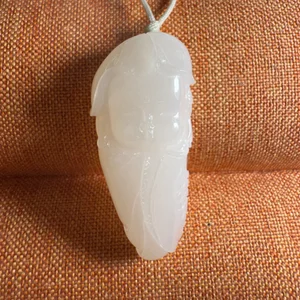
Natural Jade Bangle Pricing
Two natural jade bangles can look similar at first glance yet differ greatly in price. One important reason is that “jade” refers to two different gemstones: nephrite and jadeite.
Although both have been treasured for centuries and are exceptionally well suited to jewellery, they are not evaluated in exactly the same way. Colour, texture, translucency and natural characteristics all matter—but their importance can be very different depending on the type of jade.
Nephrite: Fineness, Texture and Lustre Matter
Fine nephrite is often appreciated for its dense structure, smooth texture and soft, silky or oily lustre. Unlike jadeite, high translucency or vivid colour is not necessarily the main measure of quality.
Colour
Nephrite occurs in a surprisingly wide range of colours, including white, creamy white, greenish white, celadon, yellow, sugar brown, smoky tones and many shades of green.
For Hetian nephrite, colour is evaluated together with texture and overall character. Fine white nephrite, for example, is not simply about being as white as possible. A beautiful piece may have a warm, soft white tone combined with exceptional fineness and a rich, smooth lustre.
Green nephrite is evaluated differently. Depth, saturation, evenness and attractiveness of colour can all influence value, but the quality of the material underneath the colour remains important.
Structure and Fineness
This is particularly important in nephrite.
Fine nephrite has an extremely compact, interlocking fibrous structure. Visually, a finer structure generally produces a smoother, more unified appearance with less obvious graininess.
This fineness contributes to one of nephrite’s most distinctive qualities: its substantial yet silky appearance and exceptionally smooth handfeel.
For many fine Hetian nephrites, this quality of texture can be more important than simply having greater translucency.
Translucency
Nephrite does not need to look highly transparent or “icy” to be beautiful.
Fine material may allow light to enter gently while still maintaining a dense, substantial appearance. This balance between gentle translucency, fineness and soft lustre is part of the traditional beauty of high-quality nephrite.
Therefore, comparing two nephrite bangles simply by asking “Which one is more translucent?” can be misleading.
Jadeite: Colour, Texture and Translucency Work Differently
Jadeite has a different visual character and is evaluated somewhat differently from nephrite.
In fine jadeite, colour, translucency and the fineness of the crystalline structure can have a particularly strong influence on value.
Colour
Colour can dramatically affect jadeite prices.
Green is the best-known example, but not every green jadeite has the same value. Saturation, brightness, purity of tone, distribution and the amount of attractive colour present all matter.
Lavender, white, colourless, yellow and other natural jadeite colours have their own appeal and should be judged according to their individual qualities rather than against green alone.
A small area of exceptionally beautiful colour can sometimes make a significant difference to a jadeite bangle.
Texture and Structure
Jadeite has a crystalline structure that is visually different from nephrite’s fine fibrous structure.
The finer and more compact the crystals appear, the smoother and more refined the jadeite generally looks. A coarser crystalline structure may make the material appear more granular or less luminous.
This is why two jadeite bangles with similar colour can still look—and be valued—very differently.
Translucency
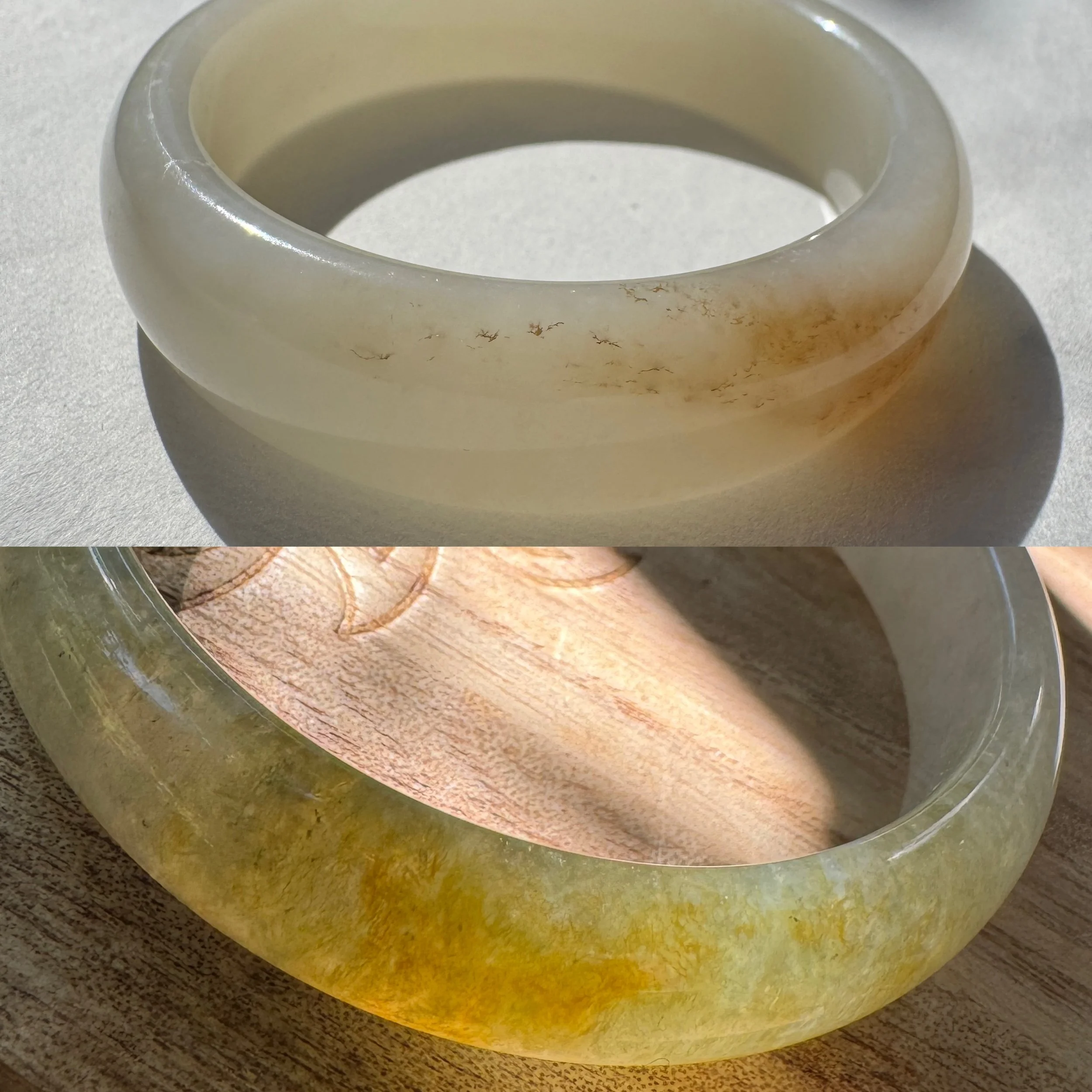
Natural Hetian nephrite (top) and Myanmar jadeite (bottom)—both translucent, yet expressing light differently: nephrite with a soft, substantial glow, and jadeite with greater visual depth and crystalline translucency. (shop our bangles here online)
Translucency often plays a particularly important role in jadeite.
When light penetrates fine jadeite, it can create depth, brightness and the luminous quality often associated with fine translucent or “icy” jadeite.
However, translucency still needs to be considered together with colour and texture. A highly translucent bangle with weak colour is not automatically more desirable than a less translucent piece with beautiful, lively colour.
Natural Characteristics Can Change the Price Significantly
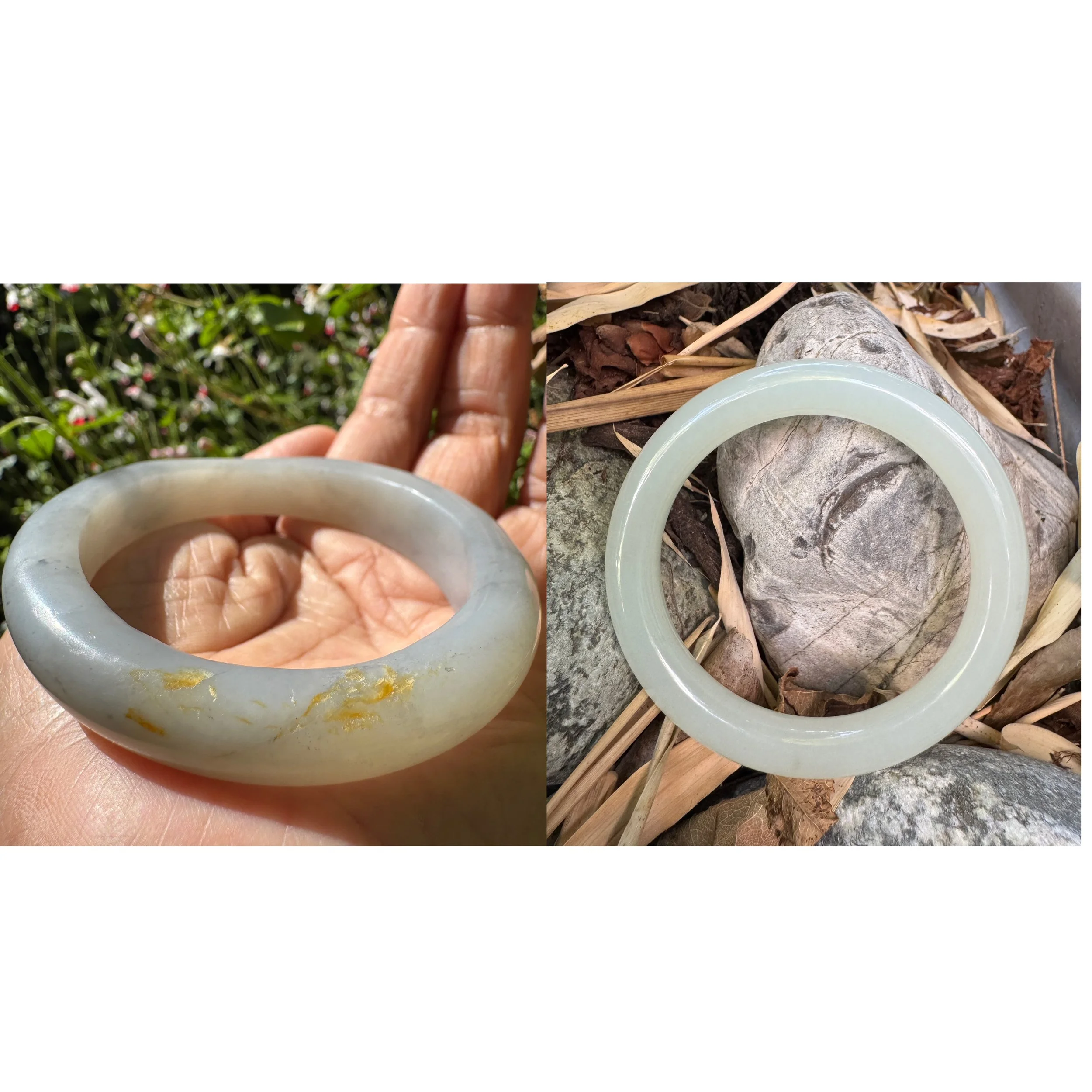
Two natural Hetian nephrite bangles—one distinguished by unique natural colour patterns and hand-shaped contours, the other by a more uniform appearance. Individual character and craftsmanship can also contribute to a jade bangle’s value.
Both nephrite and jadeite are natural stones, so inclusions, colour variations, mineral markings, water lines and structural features can occur.
Their effect on value depends on what the feature is, where it is located, how visible it is and whether it affects durability.
A minor natural inclusion may have very little effect on the beauty of a bangle. A prominent structural feature, however, may substantially reduce its market value.
This explains why a beautiful natural jade bangle with some visible natural characteristics can sometimes be offered at a considerably lower price than an otherwise similar-looking piece.
Size, Shape and Material Usage
A bangle requires a surprisingly large area of suitable jade rough.
The maker must find enough continuous material to cut the entire circular form while avoiding serious structural weaknesses. Larger inner diameters, thicker bands and certain traditional shapes may require considerably more usable material.
For fine jade, finding a sufficiently large section of material with desirable colour and texture can itself be difficult.
So Why Can Two Jade Bangles Have Such Different Prices?
There is no single feature that determines the price of natural jade.
For nephrite, particular attention is often given to:
fineness of structure · texture · lustre · colour · density and overall character
For jadeite, the balance often places greater emphasis on:
colour · translucency · crystalline fineness · colour distribution and overall visual quality
Origin, natural characteristics, size, rarity of the particular material and craftsmanship can further influence both.
Nephrite or Jadeite: Is One More Valuable?
There is no general rule that jadeite is more valuable than nephrite, or that nephrite is more valuable than jadeite. They are different gemstones with different quality standards and different markets.
Exceptional Hetian nephrite—particularly material with outstanding fineness, texture, colour and provenance—can command very high prices, just as exceptional natural jadeite with remarkable colour and translucency can. At the same time, both nephrite and jadeite are available across a very wide range of quality and price levels.
For this reason, it is more meaningful to evaluate the quality and character of an individual piece within its own type of jade, rather than trying to rank nephrite and jadeite against each other. Each has its own qualities, traditions and beauty.
At Jade Master Vancouver, we examine each piece individually and describe its colour, texture, translucency and natural characteristics as clearly as possible. Understanding these differences allows you to look beyond simple labels such as “high quality” and appreciate what actually makes one natural jade bangle different from another. ( shop our bangles)
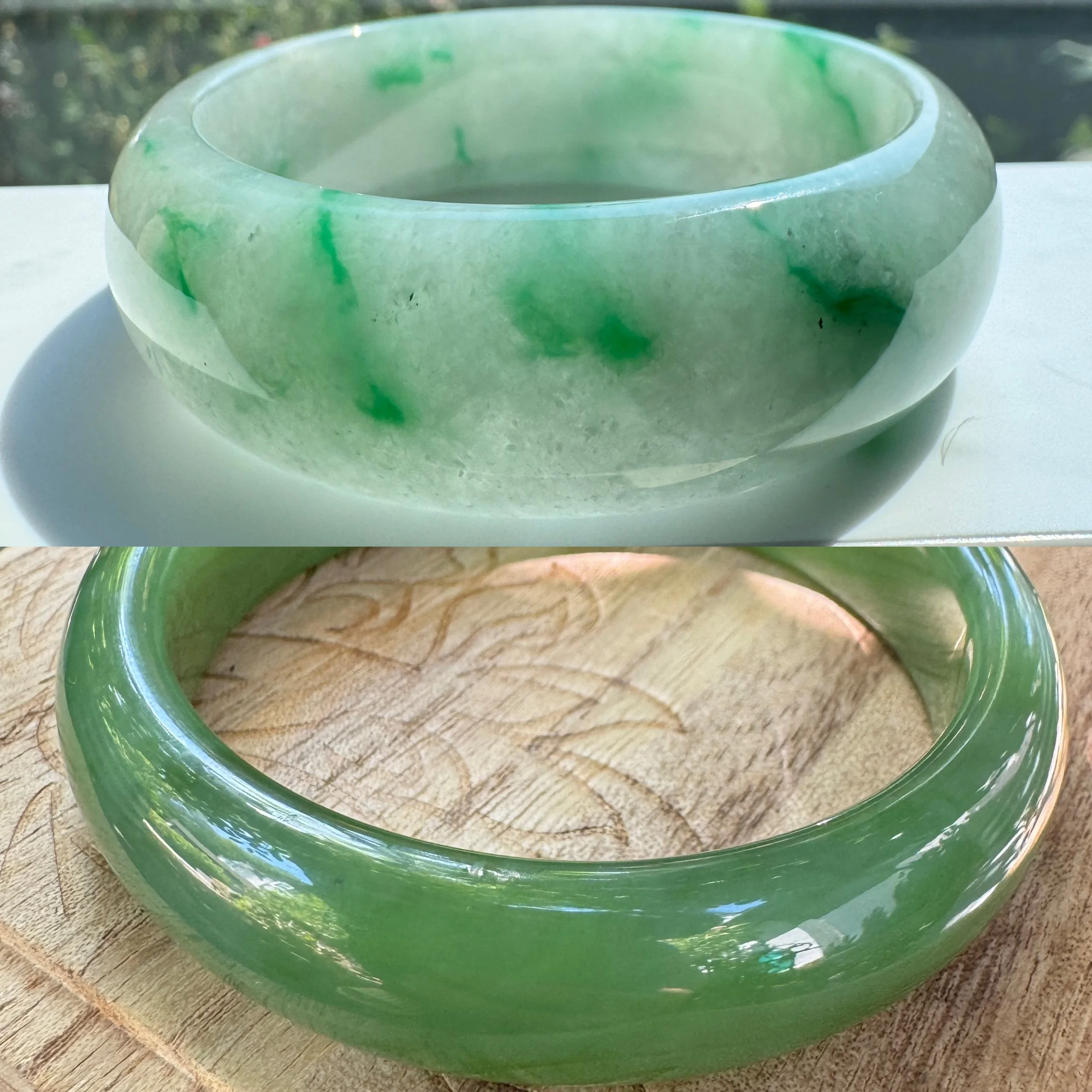
Natural Myanmar jadeite (top) and Hetian green nephrite (bottom)—two different expressions of vibrant green, in a similar price range. (shop our jade bangles bracelet online here)