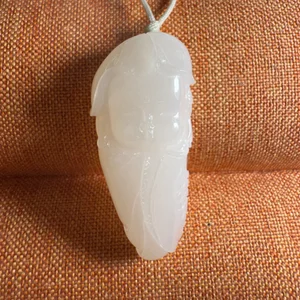
Hetian Zi Liao Nephrite Jade: Born in the Kunlun, Shaped by the River
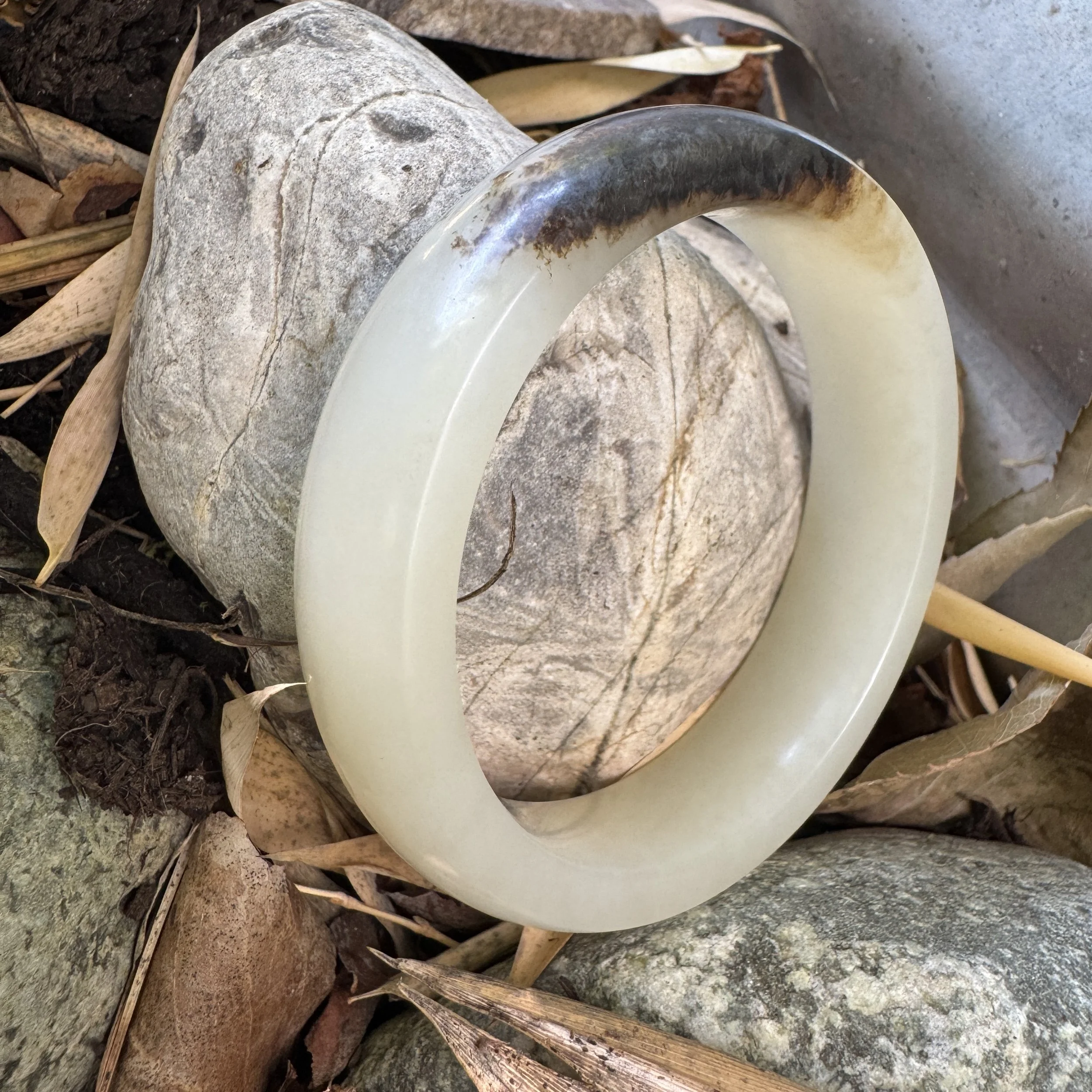
Xinjiang Hetian Ziliao mutton fat white bangle bracelet with natural dark brown jade skin reserved ( shop the listing in the online store)
# Born in the Kunlun, Shaped by the River: The Story of Hetian Jade Zi Liao
Among the different forms of Hetian nephrite, zi liao—和田玉籽料—is especially admired for its natural shape, smooth surface and individual character. The term refers to nephrite found in river or placer deposits in the Hetian region of Xinjiang. Each piece carries traces of both its mountain origin and its long journey through water and stone.
## From Mountain to River
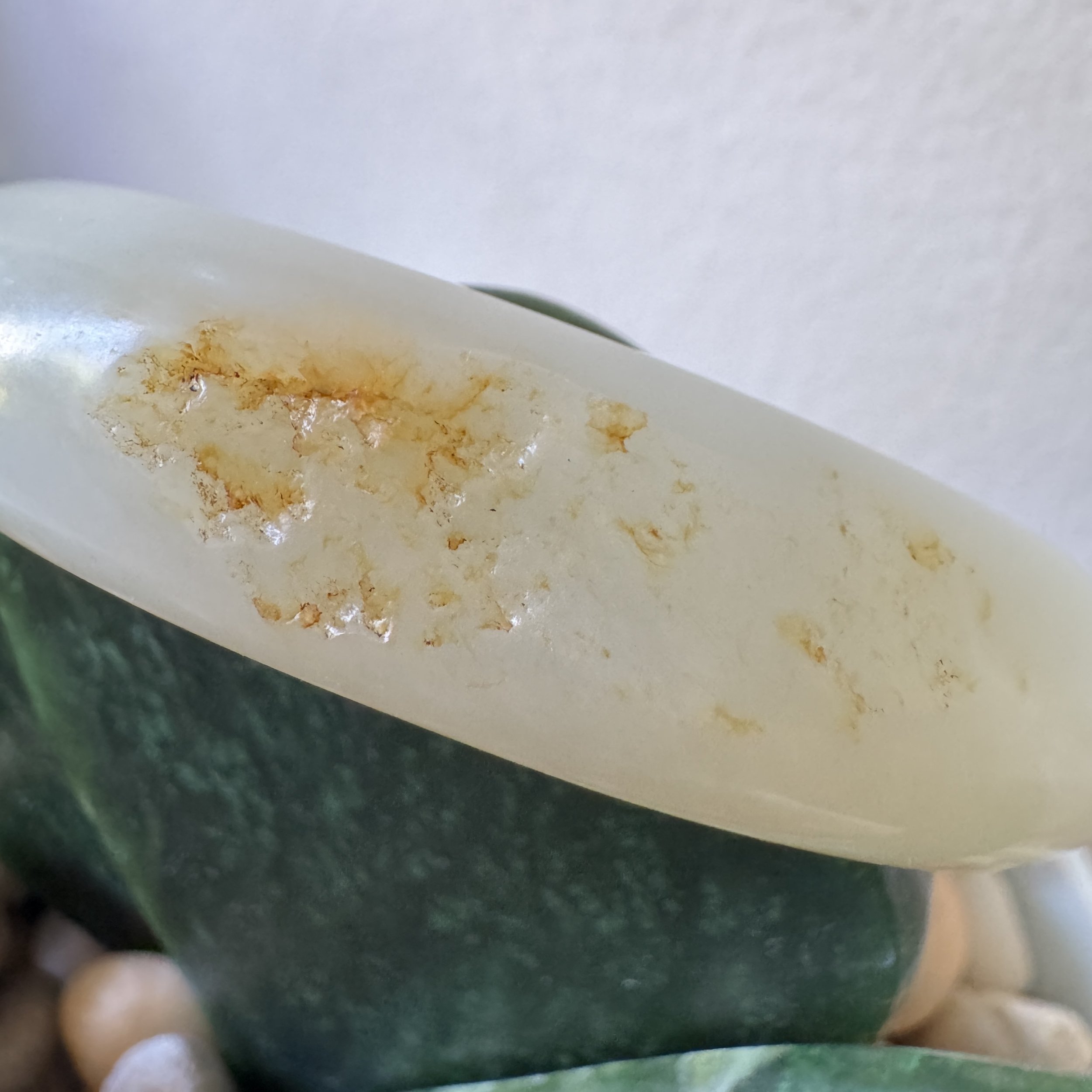
Beautiful Charming golden jade skin reserved on the Zi Liao mutton fat white bangle bracelet ( shop the listing in the store )
Hetian nephrite first forms within the mountains. Over time, weathering and erosion release pieces from the original deposits, and mountain streams or glacial meltwater carry them downstream. As the jade moves through the river system, contact with gravel, sand and other rocks gradually softens its sharp edges, creating the rounded or irregular pebble-like form associated with zi liao.
The river does not create the nephrite or automatically make it finer. It changes the stone’s exterior while the jade’s inner structure was formed much earlier within the mountain. For this reason, every piece of zi liao reflects two natural histories: its original geological formation and its later transformation through water, movement and time.
## Zi Liao and Shan Liao
Zi liao is sometimes translated as “seed material,” but Hetian river pebble nephrite is clearer for an international audience. It differs from shan liao, or mountain material, which is mined directly from a primary deposit and usually has more angular, freshly broken surfaces.
River-worn zi liao may have an asymmetrical outline, gently flattened areas, fine natural depressions and subtle changes in surface texture. These characteristics are part of its appeal, especially when a carver preserves the original form. However, a rounded shape alone does not prove that a stone is genuine Hetian zi liao; origin and treatment should be supported by reliable gemological testing when necessary.
## Natural Skin and Colour
One of the most distinctive features of zi liao is its natural outer skin. During weathering and long contact with surrounding minerals, the surface may develop colours ranging from pale golden beige and warm ochre to russet brown, reddish brown or near black.
This skin may appear as a soft veil, a concentrated patch or an irregular border. In a thoughtfully carved piece, part of it is often retained as a natural accent, creating a beautiful contrast with white, creamy white, greenish-white, celadon or darker nephrite beneath. Natural skin adds individuality, but it should not be treated as a guarantee of quality or authenticity.
## Texture, Lustre and Translucency
Nephrite is composed of densely interwoven microscopic mineral fibres. This structure gives it exceptional toughness and the smooth, cohesive appearance for which it is known. Fine Hetian zi liao often has a soft oily or waxy lustre rather than a sharp, glass-like shine.
Some pieces show gentle translucency at the edges or under stronger light while maintaining nephrite’s substantial, silky appearance. Others are more opaque but possess a fine texture, even colour and beautifully smooth polish. Translucency is only one aspect of the stone and should never be the sole measure of its beauty.
## Why Fine Zi Liao Is Worth Collecting
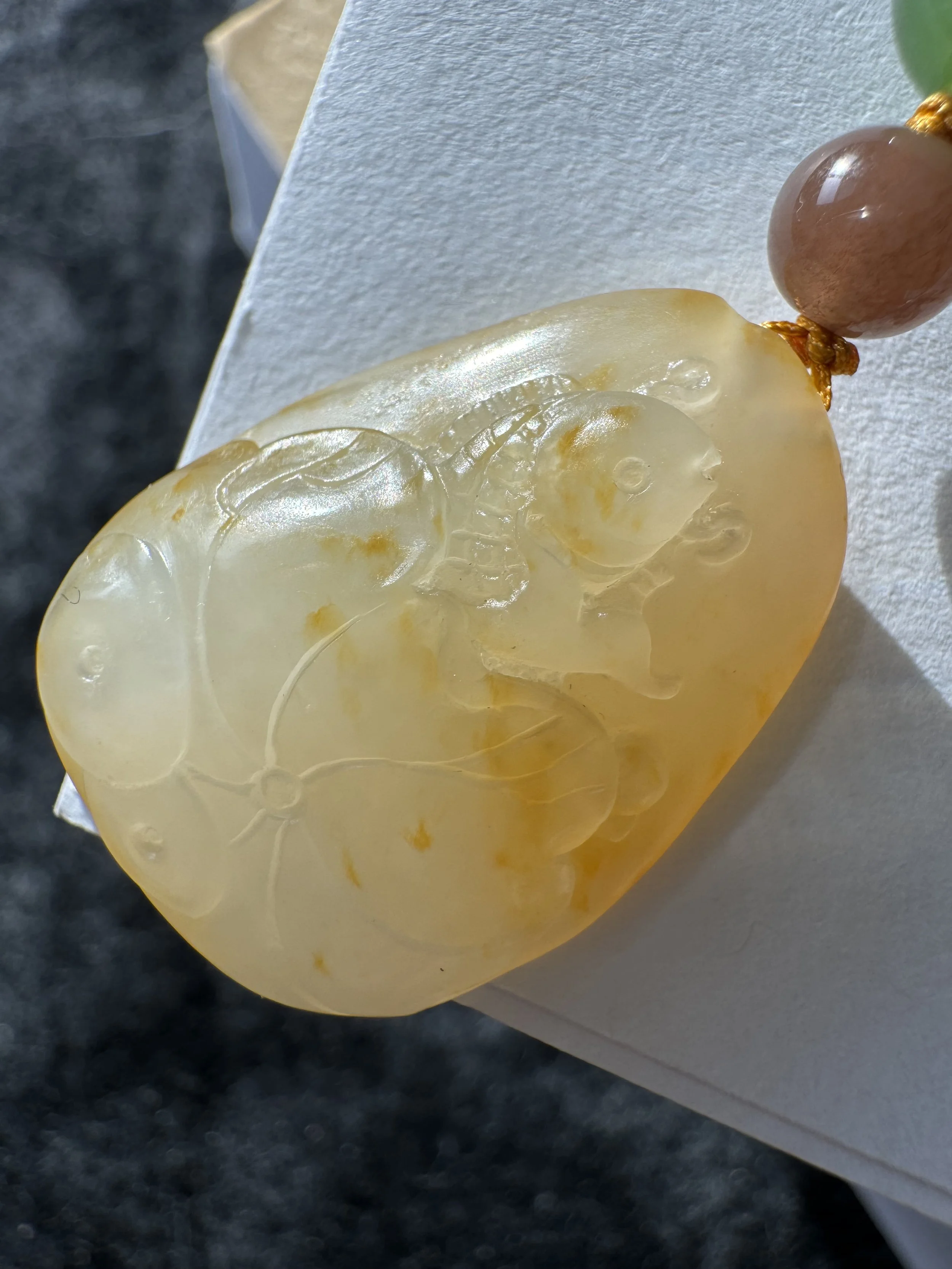
A Zi Liao Pendant carved By jade master Yuan Jiaqi ( shop the listing on our store)
Not every piece of zi liao has the same quality or collectible importance. The most desirable examples bring together fine, dense jade texture, an attractive natural colour, smooth oily lustre, sound structure and distinctive river-worn character. A well-preserved skin or original pebble shape can make a piece even more individual, especially when a skilled artisan allows these natural features to guide the design.
Fine genuine Xinjiang Hetian zi liao is also limited by the nature of its formation. Each piece must first develop within the mountain, then survive weathering and a long journey through the river system. This process cannot be quickly reproduced, and no two stones carry exactly the same shape, skin or internal character. For collectors, its appeal lies not only in scarcity, but also in the combination of material quality, natural history, cultural heritage and craftsmanship. A good piece is worth collecting because it preserves all of these qualities in a form that is both beautiful and genuinely individual—not because the name zi liao alone guarantees value or future financial return.
## The Individual Beauty of Zi Liao
No two pieces of Hetian zi liao are exactly alike. One may be softly oval and evenly coloured; another may retain an unusual contour, warm russet skin or delicate natural mineral variations. Some are suited to detailed carving, while others are most expressive when their original pebble form is left largely untouched.
The beauty of Hetian river pebble nephrite lies in this balance between material and history. Its inner texture reflects its mountain origin, while its shape and skin record its journey through the landscape. When treated with sensitivity by the artisan, zi liao becomes more than a polished gemstone—it becomes an individual expression of geology, water, time and human craftsmanship.