Jade Carving
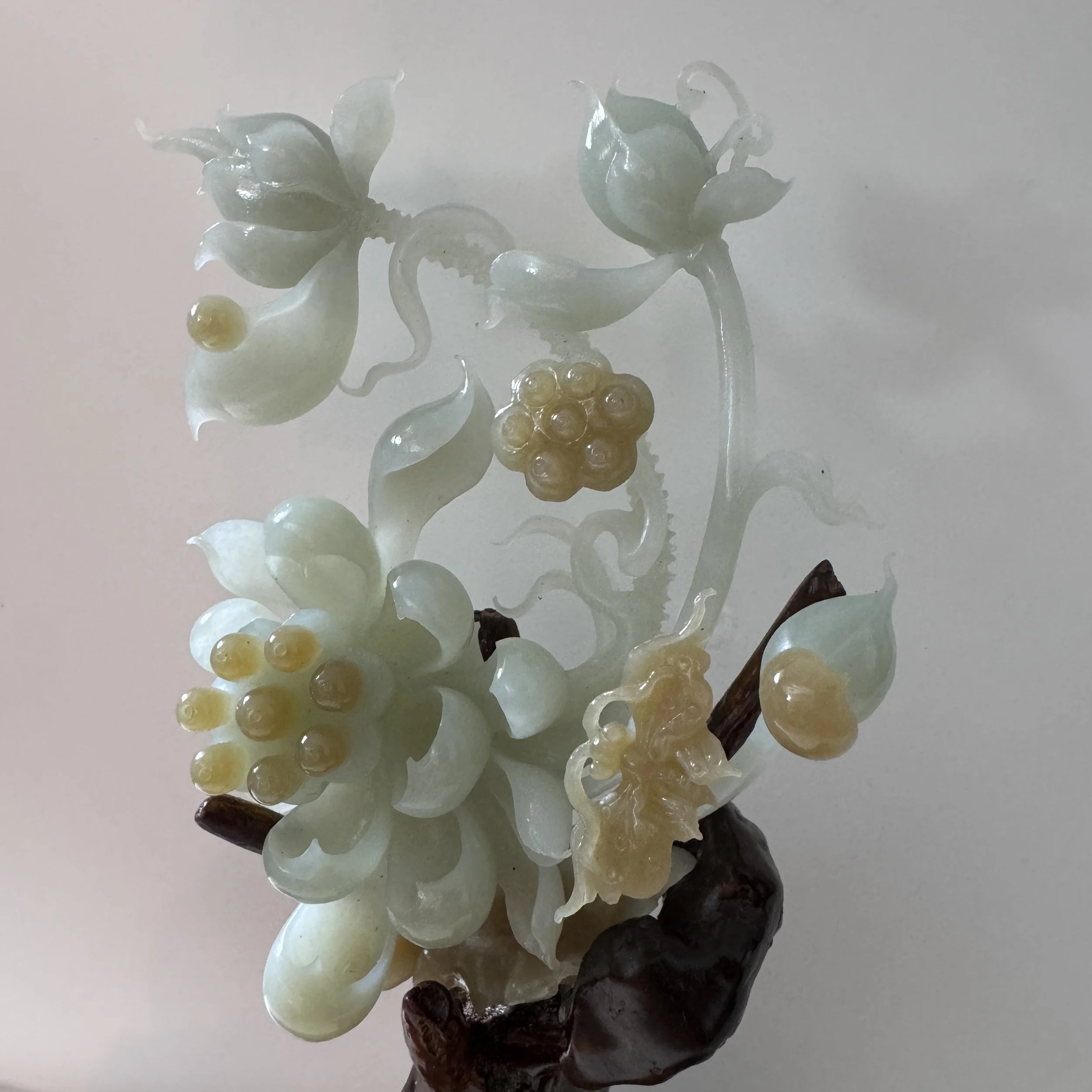
An exquisite hand carved lotus blossom applied on a piece of natural Xinjiang Hetian white and nephrite jade ( read more details and shop here )
When most people first look at jade, they notice its colour.
A jade carver looks deeper.
Before deciding what a piece of jade may become, an experienced carver studies its colour, texture, structure, translucency, natural markings and shape. These qualities are not considered separately. Together, they reveal the character of the stone—and often guide what should be made from it.
This way of looking at jade is also an important part of how we understand and select jade at Jade Master Vancouver.
Looking Beyond Colour
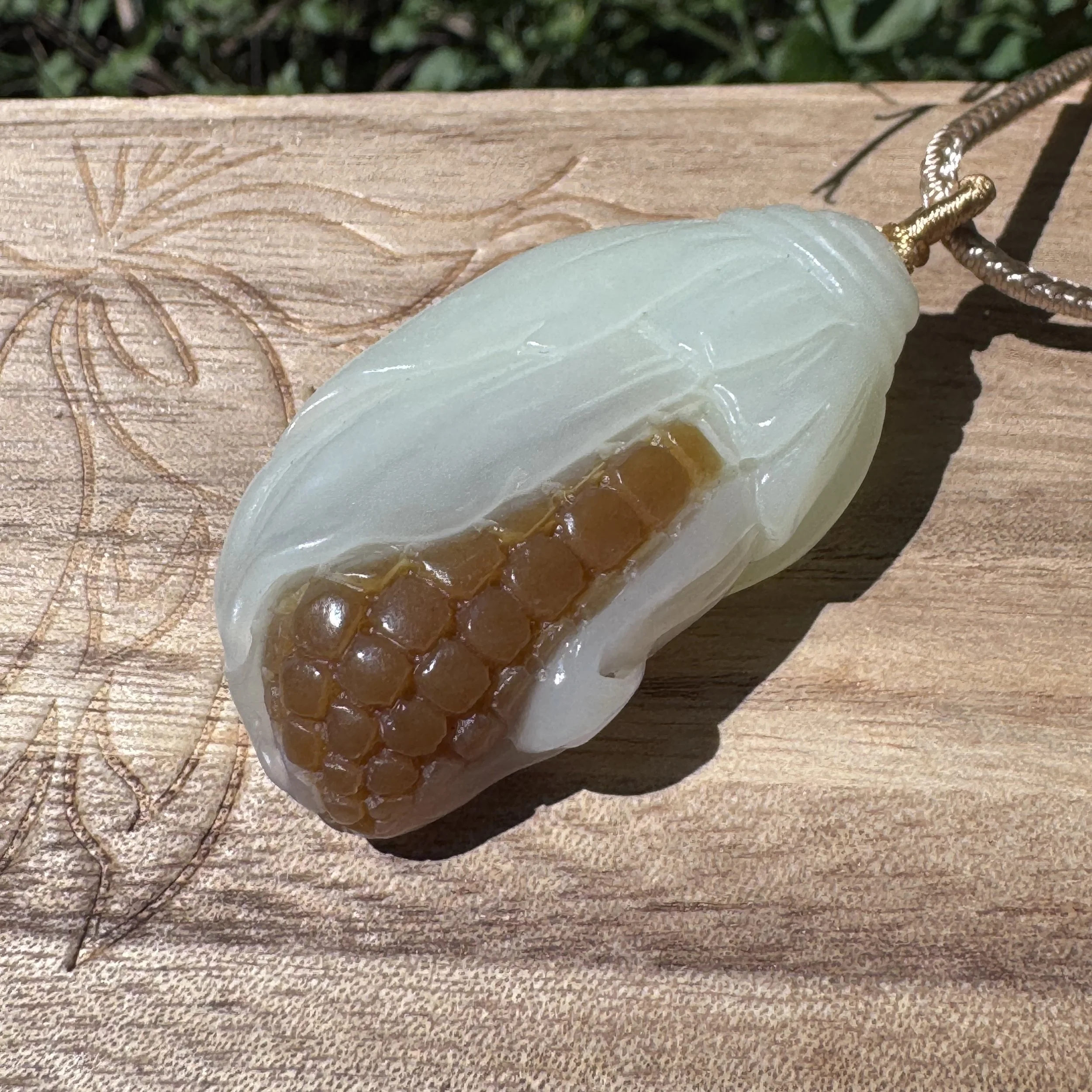
Xinjiang Hetian mutton fat white sugar nephrite jade carved into a corn pendant (detail description and shop listing here)
Beautiful colour naturally attracts attention, but colour alone does not determine the quality of jade.
A carver looks at how the colour travels through the material. Is it even or concentrated? Does it become richer in certain areas? Does the colour follow the natural structure of the stone?
Sometimes an uneven area of colour may initially appear less desirable. In the hands of an experienced carver, however, it can become the most distinctive part of the finished piece.
The goal is not always to make jade look perfectly uniform. It is often to understand what the material already offers.
Reading the Structure
Before cutting jade, understanding its internal structure is essential.
A carver examines the fineness and density of the material, as well as natural lines, mineral inclusions, colour transitions and other structural characteristics.
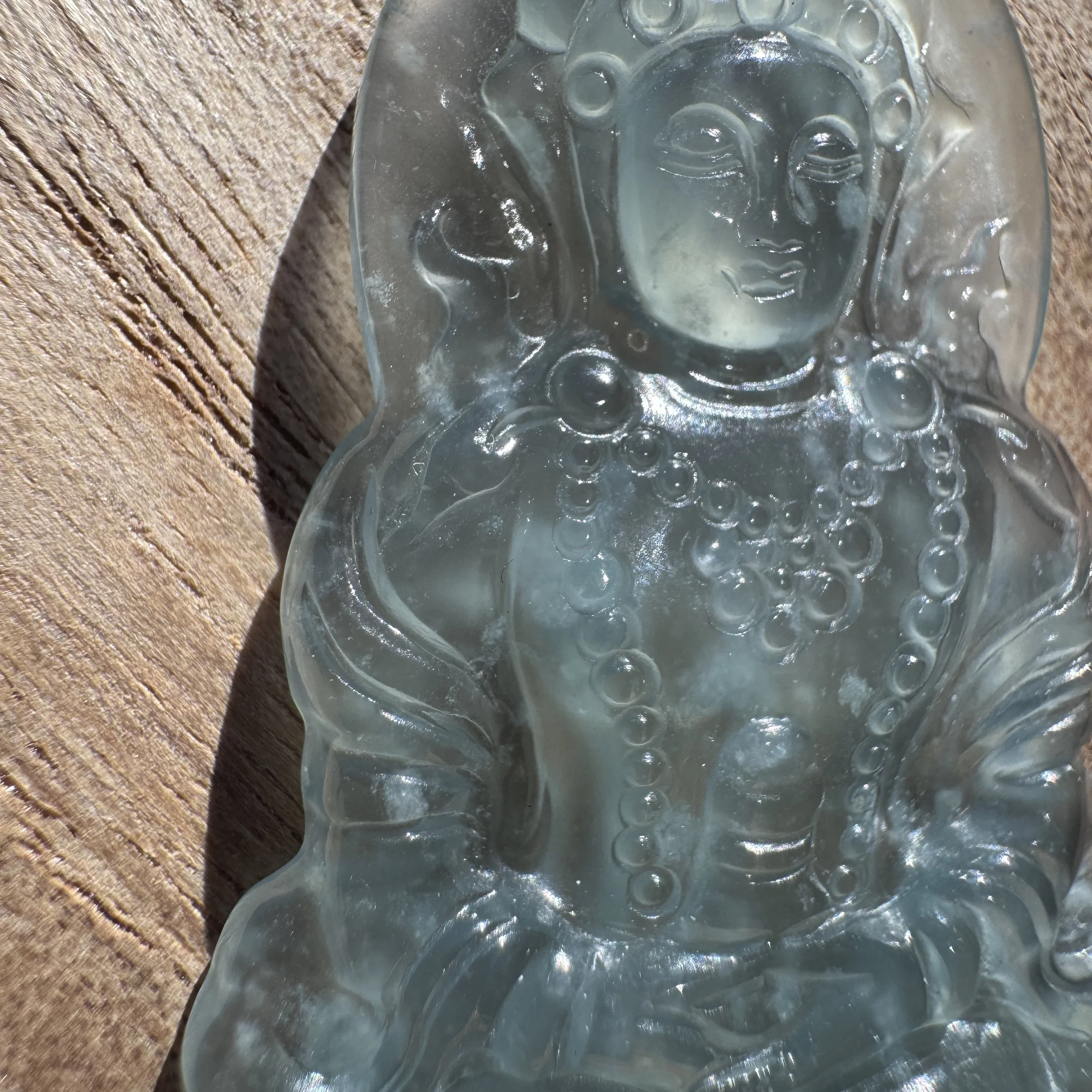
Icy jadeite Guanyin Pendant with exquisite carving ( read description and shop here )
With nephrite, an especially fine and compact structure can create the smooth, substantial and silky quality for which fine Hetian jade is appreciated. With jadeite, the size and compactness of its crystalline structure influence clarity, translucency and the way light moves through the stone.
These differences affect not only how jade looks, but also how it should be cut and polished.
Working With Natural Characteristics
Natural jade is rarely completely uniform.
It may contain colour variations, mineral inclusions, water lines, natural patterns or areas of different texture. An experienced carver does not automatically regard all of these as flaws.
Instead, the first questions are: What is this characteristic? Where does it run? Can it be removed, should it be avoided—or could it become part of the design?
A natural colour patch might become a leaf, flower or part of a carved figure. A beautiful transition between two colours may determine the entire composition. An unusual natural shape may suggest that very little material should be removed at all.
This traditional approach is sometimes described as working with the jade rather than against it.
Knowing What to Keep
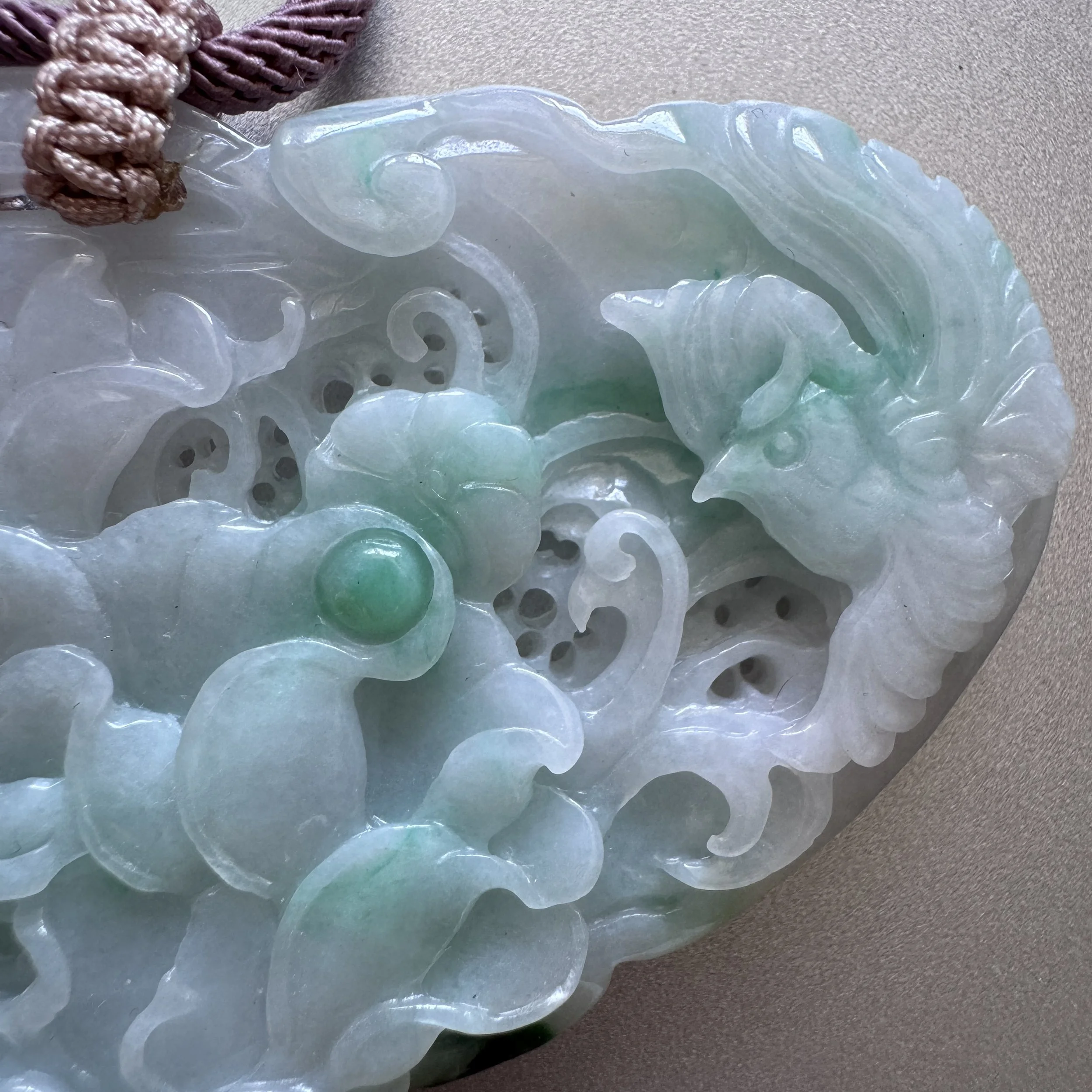
One of the most important skills in jade carving is knowing what not to cut away.
Jade rough is limited. Every cut permanently removes material.
When a piece contains especially beautiful colour, fine texture, natural skin or an interesting pattern, preserving these qualities may be more important than creating a perfectly symmetrical form.
This is why some handmade jade pieces retain gentle irregularities, natural contours or deliberately organic shapes. These details can tell us something about the original stone and the decisions made by the carver.
From Jade-Carving Experience to Jade Selection
This perspective is particularly meaningful to us at Jade Master Vancouver because our background comes from jade carving itself.
Working directly with jade develops a different relationship with the material. Before a finished bangle, pendant or carving exists, someone must understand the rough: where to cut, which section to preserve, how the colour and structure continue beneath the surface, and whether a natural characteristic affects beauty, durability—or simply gives the jade its individuality.
That experience also influences the way we select finished jade today.
We do not look only for a particular colour or a highly polished surface. We consider the material itself: its structure, texture, translucency, natural characteristics and how thoughtfully the original jade has been used.
The Origin of the Material Matters—But It Is Not the Whole Story
Knowing jade at its source also teaches an important lesson: origin alone does not determine quality.
Hetian nephrite from different deposits can vary enormously in fineness, colour, texture and character. The same is true of jadeite. Even material from the same area—or sometimes the same piece of rough—can contain sections of very different quality.
For a carver, therefore, the name of the origin is only the beginning. The individual material still has to be examined.
This is one reason we prefer to describe what can actually be seen and appreciated in each piece rather than relying only on labels such as “high quality,” “rare” or “premium.”
Every Piece of Jade Has Its Own Answer
A jade carver does not begin by asking, How can I make this stone look like every other piece?
The better question is:
What is already here?
The colour, texture, structure, translucency, natural markings and shape provide the answer.
At Jade Master Vancouver, this way of looking at jade remains at the heart of how we select and describe our pieces. Our goal is not to tell you simply that one jade is “better” than another, but to help you see the qualities that make each piece different.
Because understanding jade begins with learning how to look at it.